by Stephanie Plein, Keshet Speech & Language Pathologist
Thanksgiving is a time for family, friends, food and connection. However, busy gatherings, changes in routine, unfamiliar people and increased sensory input can make communication challenging for some people with disabilities or other communication needs. With a few simple strategies, we can create a more inclusive environment where everyone has opportunities to communicate, participate and feel understood.
1. Recognize all forms of communication
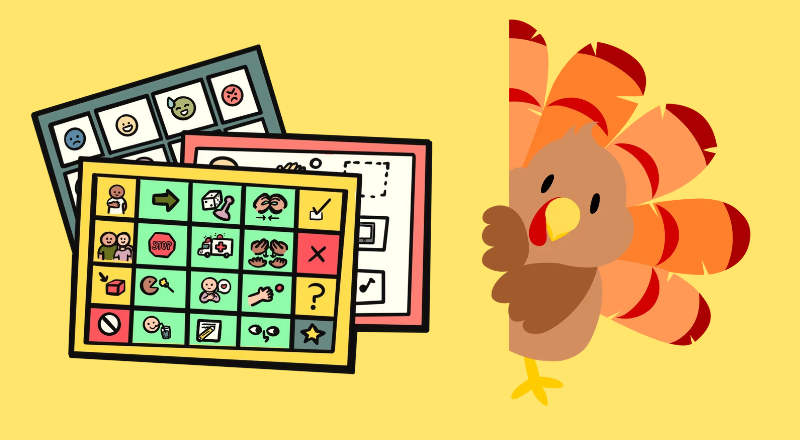
Communication looks different for everyone! Some individuals communicate through speech, while others use AAC devices, picture boards, gestures, facial expressions, signs or written words. Keep communication tools accessible throughout the gathering and acknowledge all meaningful attempts to communicate. Feel free to use this Thanksgiving placemat filled with phrases and foods for your child to have in front of them during the meal!
2. Give everyone time to respond
Allow extra processing time after asking a question or offering a choice. Avoid repeating questions too quickly or answering on someone’s behalf. A pause creates space for individuals to process language and respond in their own way.
3. Offer choices and encourage self-advocacy
Provide opportunities for individuals to express their preferences. They may communicate what they want to eat, which activity they would like to join or whether they need a break. Remember that saying or communicating “no,” “stop,” and “all done” are important communication skills, too!
4. Prepare for changes in routine
Holiday gatherings can bring unfamiliar environments, new people and unexpected changes. Visual schedules, pictures, calendars or a simple explanation of what to expect can help individuals feel more prepared. Consider previewing the day’s activities and identifying a quiet space for anyone who needs a break. Using a Thanksgiving core board is a great way to preview the kinds of things your child may see at the Thanksgiving table and how to best respond.
5. Focus on connection, not performance
Avoid putting pressure on individuals to greet others, answer questions, make eye contact, or say “thank you” on demand. Instead, model social language naturally and create opportunities for meaningful interaction. Sharing a smile, sitting alongside someone, using a communication device or participating in a favorite activity can all be ways to connect.
6. Practice and model at home!
During Thanksgiving, model a few useful words or phrases using the communication method that works best for your family member:
- “I like it!” or “I don’t like it.”
- “More, please.” or “All done.”
- “I need a break.”
- “Help me.”
- “My favorite!”
- “No, thank you.”
These messages can be spoken, signed, written or communicated through AAC and visual supports. There is no need to require someone to repeat them. Simply modeling language provides opportunities to learn and communicate.
The goal is not for everyone to communicate in the same way. The goal is for everyone to have a way to express themselves, make choices and feel included. By slowing down, offering support and respecting individual communication styles, we can make Thanksgiving more welcoming for everyone.
From our entire Keshet family to your family, we wish you a happy, inclusive and communication-friendly Thanksgiving!
