by Dana Stein, Student at Ida Crown Jewish Academy
In my sophomore English class, we spent an entire unit exploring how Jewish values align with disability advocacy and inclusion. After studying Jewish texts and researching disability rights, we partnered with Keshet to meet people with disabilities and learn directly from their lived experiences. This project did more than teach me facts. It changed the way I understand disability, inclusion and my responsibility to create communities where everyone belongs.
Before this project, I understood disability mostly through what I had observed and heard, but I had never fully considered the history of discrimination, the significance of the Americans with Disabilities Act (ADA) or what true inclusion really means. While studying disability barriers and the protections created by the ADA gave me a new perspective, it was the conversations we had with Keshet students and adults that were the most meaningful part. Hearing firsthand about people’s lived experiences and simply getting to know individuals whose lives are shaped by disability made the lessons from the classroom deeply personal and transformed knowledge into true understanding.
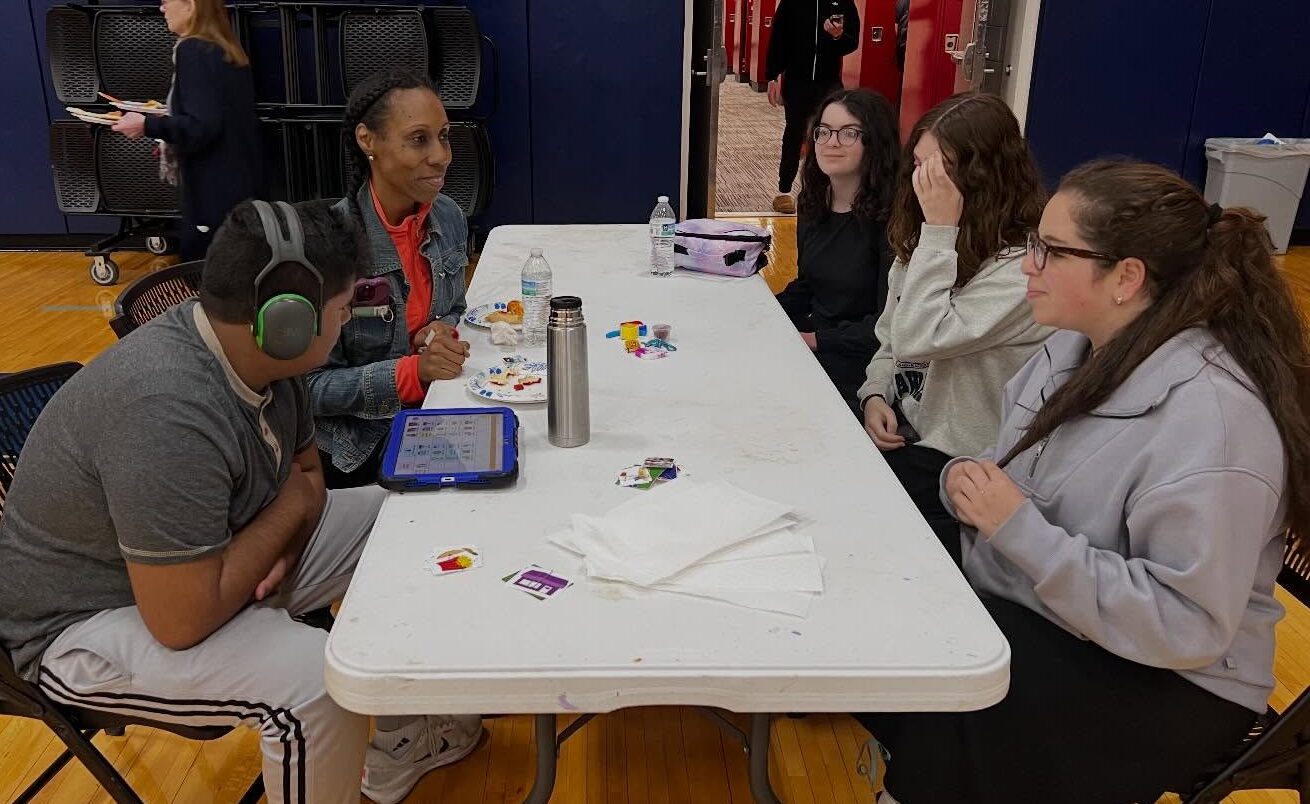
One of the most meaningful parts of the project was spending time with Keshet High School students, whose school is located at Ida Crown Jewish Academy. Over lunch, we talked about our families, classes, hobbies and favorite things. Those conversations reminded me that we had far more in common than I had expected.
We also attended a panel with Michelle Friedman, Keshet’s former Board Chair and a blind woman, as well as Tova Klein and Jonah Kravitz from GADOL, Keshet’s adult day program. Tova’s pride in sharing her experiences at seminary, gymnastics and swimming, Jonah’s excitement about his job, his roommates and traveling, and Michelle’s thoughtful perspective on belonging and independence made the project unforgettable.
The conversations gave me a deeper understanding of disability and inclusion, but a few lessons especially changed the way I think. Michelle introduced us to the disability community’s motto, “Nothing about us without us,” explaining that people with disabilities should always be included in decisions that affect their lives. She also challenged the phrase “special needs,” explaining that people with disabilities do not have special needs. They have the same human rights as everyone else.
Michelle also helped me rethink the meaning of independence. Being independent does not mean doing everything by yourself. It means having the ability to make your own decisions about your life, even when you need support from others. Her message helped me understand that inclusion is not simply about helping people with disabilities. It is about respecting their voices, choices and independence.
As a Jew, I now understand that advocating for people with disabilities is not optional. The Torah repeatedly commands us to care for those who are vulnerable, not to place a stumbling block before the blind and to love the stranger as ourselves. This project showed me that these are not just beautiful ideas. They are instructions for everyday life.
That means speaking up when someone makes an ignorant comment about a person with a disability. It means choosing inclusion over exclusion. It means supporting organizations like Keshet, which creates opportunities for people with disabilities to learn, work, live and belong. It means making sure that people with disabilities are included in conversations and decisions that affect them instead of assuming others know what is best. It means asking how someone wants to be supported rather than assuming what they need.
One idea has stayed with me more than any other. Michelle described the difference between hospitality and home. Hospitality means making someone feel welcome. Home means creating a place where they truly belong. Jewish values do not simply call us to welcome people. They call us to create communities where everyone feels at home.
Going forward, I hope to carry what I learned beyond disability alone. This project taught me that being overlooked, underestimated or excluded is not an experience unique to people with disabilities. It is something many people experience in different ways. My goal is to recognize those moments, speak up when I see them and help create communities that feel less like places where people are welcomed as guests and more like places where everyone truly belongs.
